You have to catch a ferry from The Gateway of India to reach the famous Elephanta caves. The ferry service for the island operates from 9 am to 2 pm only. The ferry prices range from INR 130 to INR 150 as per the boat convenience you choose.
Location: Gharapuri, Maharashtra
Timings: 9 am to 5 pm (Monday Closed)
Price: INR 40 for Indian Tourists and INR 250 for Foreigners
Distance from Mumbai: 21.8 Km via Eastern Fwy
History of Elephanta Caves:

The Elephanta caves on the island are believed to date back to the Silhara Kings era. However, there are no solid proves to confirm the same; still, there are several assumptions associated with its formation. Actually, the Portuguese who reached India renamed the island as Elephanta.
The caves are believed to come under the administrations of a myriad of rulers that controlled this area for many centuries till the modern age. These rulers are the Mauryas of Konkan, Chalukyas of Badami, Silaharas, Trikutakas, Rashtrakutas, Yadavas of Devagiri, Kalyani Chalukyas, Shahi dynasty of Gujarat, the Marathas, the Portuguese, and even the British.
Additionally, as per the local tradition, people believe that the artisans created the Elephanta caves without at all using their hands.
Architecture of Elephanta Caves:

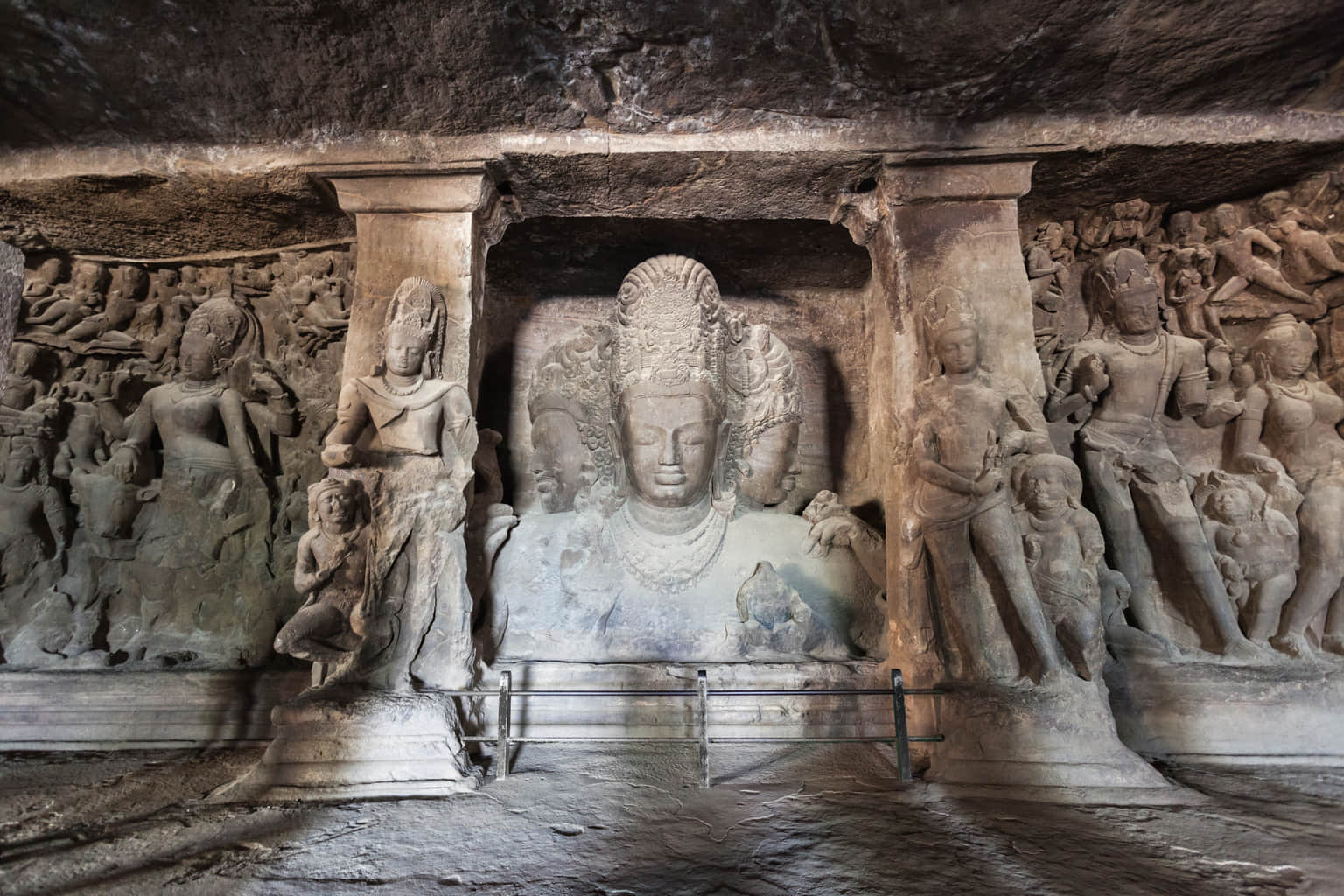
Elephanta caves is an epitome of Indian architecture depicting the deep-rooted Indian mythology in its every corner. The main cave at Elephanta caves holds an image of Ravana raising Kailash mountain. Further, at Ardhanarishvara, you can see a display of Shiva and Parvati within the same body.
When you go to the end you get to see the Sadasiva display of carved Shiva which is a 20 ft high marvel of the three-headed Shiva, called Trimurti - a classic example of Indian art. This location of Elephanta caves will grab your attention as soon as you enter the temple.
As you head to see the architecture on its southern wall you will be stunned by the magnificent sculptured forms of Ardhanariswara, Kalyanasundaram, Uma Maheswara, and Gangadhara. Further, in the west, one must explore sculptured images of Andhakaasuravadamoorthy and Nataraja and Yogiswara and Ravana Anugraha Murti images in the east.
Beside, Cave One at this place is the most beautiful site from all of the caves present here. This cave is carved out in a way that shows the glory of Buddhist architecture.
Facts about Elephanta Caves:

-Elephanta Caves has over 3000 years old history.
-Under the Portuguese rule, the main cave established at Elephanta Caves was the Hindu place of worship.
-The Portuguese defaced the majority of the sculptures carved within the caves in the 17th century.
-A lot of scholars consider that Christian Portuguese soldiers used the Elephanta caves and the sculptures as a firing range for their target practice.
-Also, until 1661, the Caves witnessed significant decay under the Portuguese. The intruders mostly displaced the cravings and the writings. Yet even today, the place features plenty to admire for the visitors.
-From the years 1872 to 1903, the British India Government charged a temple tax on people who used to come for visiting the Elephanta Caves.
-The Kshatrapa coins excavations that are dating back to the 4th century AD also unearthed from here.
-Some archaeologists associated the Elephanta caves to the Kalachuris supposedly having a specific connection with the Konkan Mauryas.
-Beside, Chalukyas and Rashtrakutas are also believed to have been behind the creation of these magnificent caves.
-The enormous elephant model, which is the source of this island's name, is now situated at Jijamata Udyan. It is the oldest public park in Mumbai.
-Proofs of paint found on the basalt caves symbolize that the artworks might actually be painted.






.jpg.jpg?w=1536&q=65&format=auto)