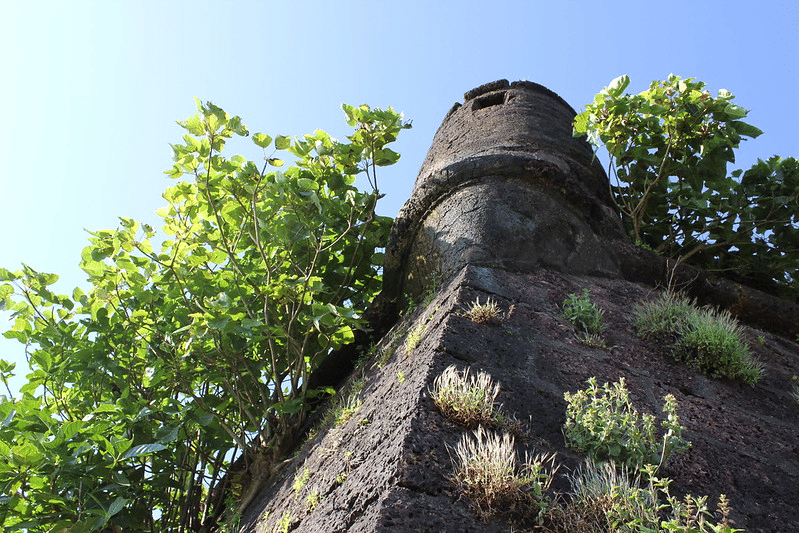
Chapora Fort, North Goa
About Chapora Fort
How To Reach Chapora Fort

Best Time To Visit Chapora Fort
 The best moment to explore Chapora Fort is during the late afternoon when the sun is not directly over your head. In Goa, during December and January, the weather still gets too hot to bear in the afternoon, especially at the hilltops.
Chapora Fort Essential Information



Why Choose Thrillophilia?
3 Million+
Happy customers from 70+ countries all around.
4.8/5
Rated across Trip Advisor and Google reviews.
Curated With Love
Special curated Indian itineraries built for Indians.
24/7 Assistance
Always there to help before and during trips.

Point of Interest for Chapora Fort
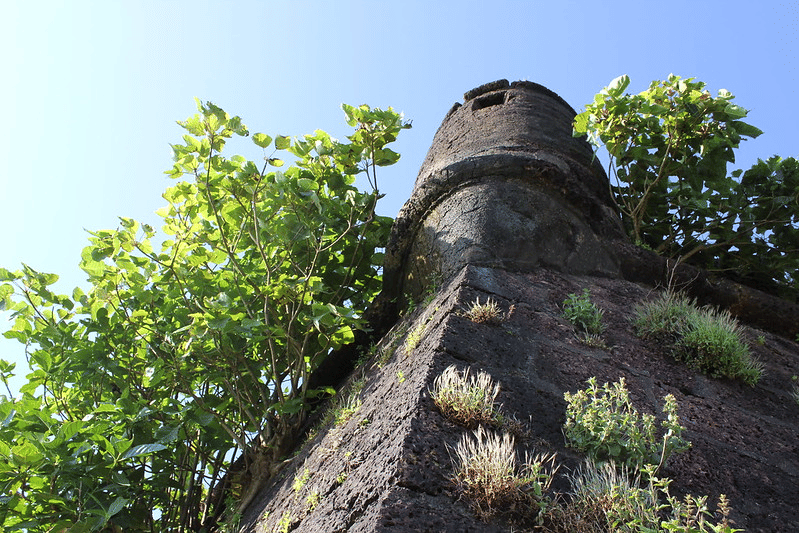
Legend Story of Chapora Fort
This fort has a very interesting tale of its ownership and creation. Firstly, it was built in 1612 by a Muslim king named Shahpura of Bijapur. His original name was Adil Shah. Then Desai’s of Sankahali occupied it. Later, in 1683, Prince Akbar partnered with his enemies: the Marathas.
The legendary tale consists of the story of the Sambhaji’s conquest in 1683. Even the Portuguese at that time, were invisible and free from any espionage, because of the height of the fort on the sloppy terrain. But the Maratha leader was pretty shrewd, clever, and smart. He knew how to strategize the plan and raid the fort. He arranged the local troupe and clung them on 1.5 m long monitor lizards.
During this siege, the Portuguese were not really prepared. So, the Marathas breached the entrance of the fort without a single shot from any fatal weapon. However, when the chief of the military got to know about the siege, the Portuguese only had one way to escape.
Chapora fort had secret tunnels constructed by Portuguese for these situations. Hence, despite the active partnership of Akbar and Marathas, who were enemies earlier, some Portuguese men were able to make a close escape during the siege. This was a time when the Portuguese realized they couldn’t control Marathas beyond the fort anymore. But around, 1717 Portuguese men had this fort back from the Marathas only to lose it in 1961, marking the independence of Goa.
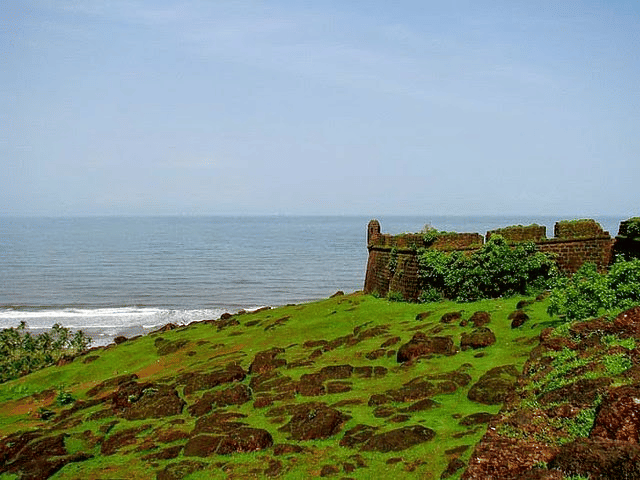
Chapora Fort & Bollywood Connect
Chapora Fort already had a historical story attached to its remaining fortress. But it gained its current recognition because of the famous scenes of Dil Chahta Hai movie which was released in 2001. It was a story of three friends starring Saif Ali Khan, Amir Khan, and Akshay Khanna. Majority of the youngsters in and around India loved that movie and could relate their lives with the story.
The movie scene, which was shot here was one of the most amazing and appealing ones. Herein, the viewer could see three friends standing and chatting. It was such a profound scene because their lives were going to change while they were deciding what to do about their life. Hence, this Chapora Fort got another name of Dil Chahta Hai fort after the release of the movie.
In the end, many youngsters, who are often confused and want to explore themselves out in the open, could find themselves in those three characters standing on the fort. That is why Chapora Fort is frequently visited by youngsters who either loved that movie or are ardent fans of those three actors.
Chapora Fort FAQs
Popular Related Attractions



Popular Related destinations
.jpg.jpg?w=1536&q=65&format=auto)


More Things to Do in North Goa
Quick links to everything else worth a slot on a longer stay.