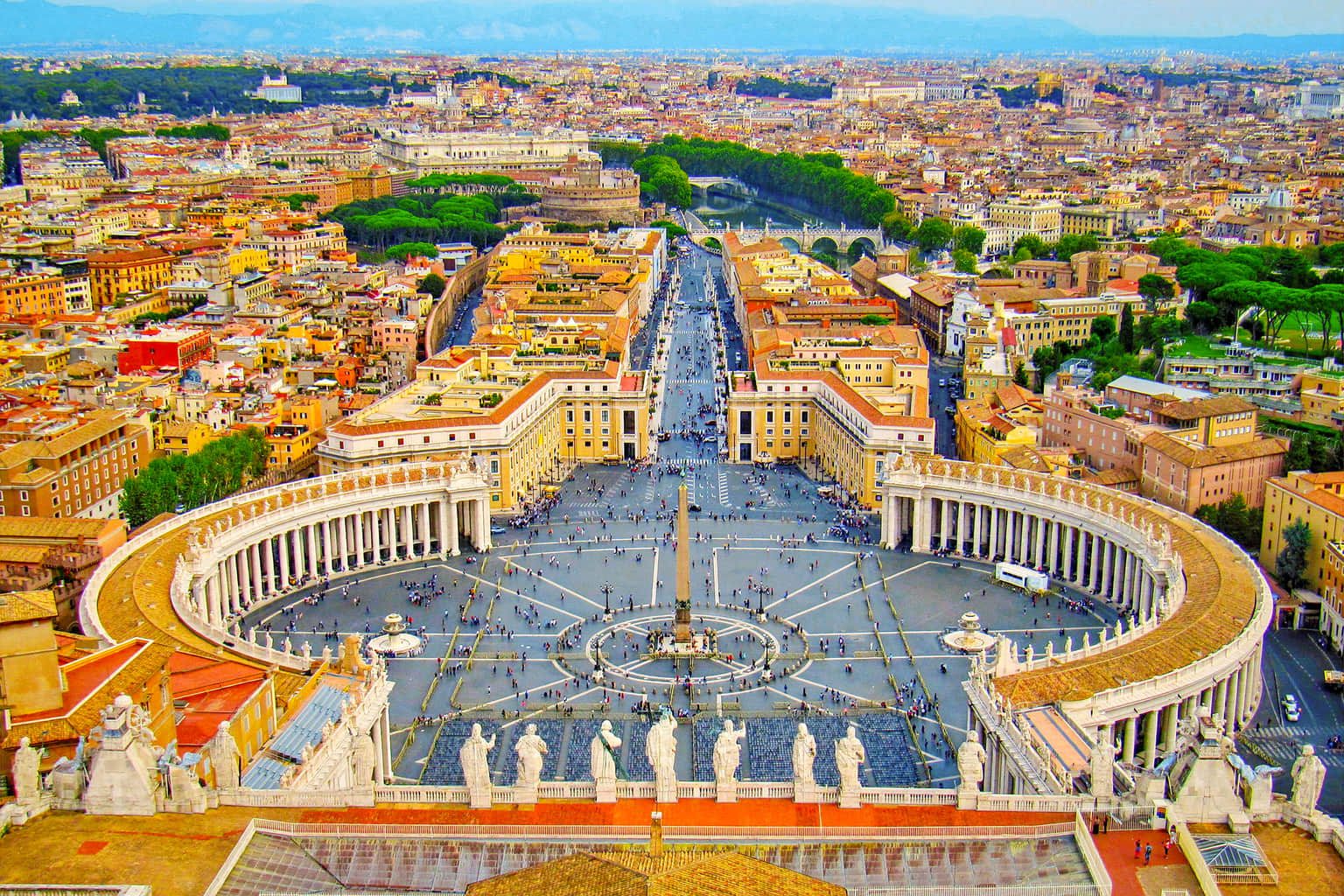
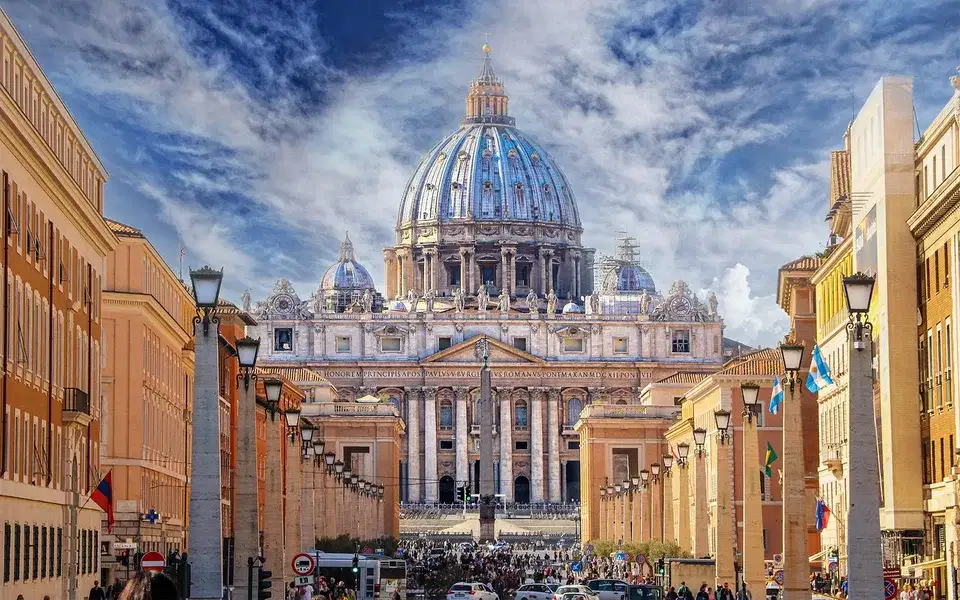
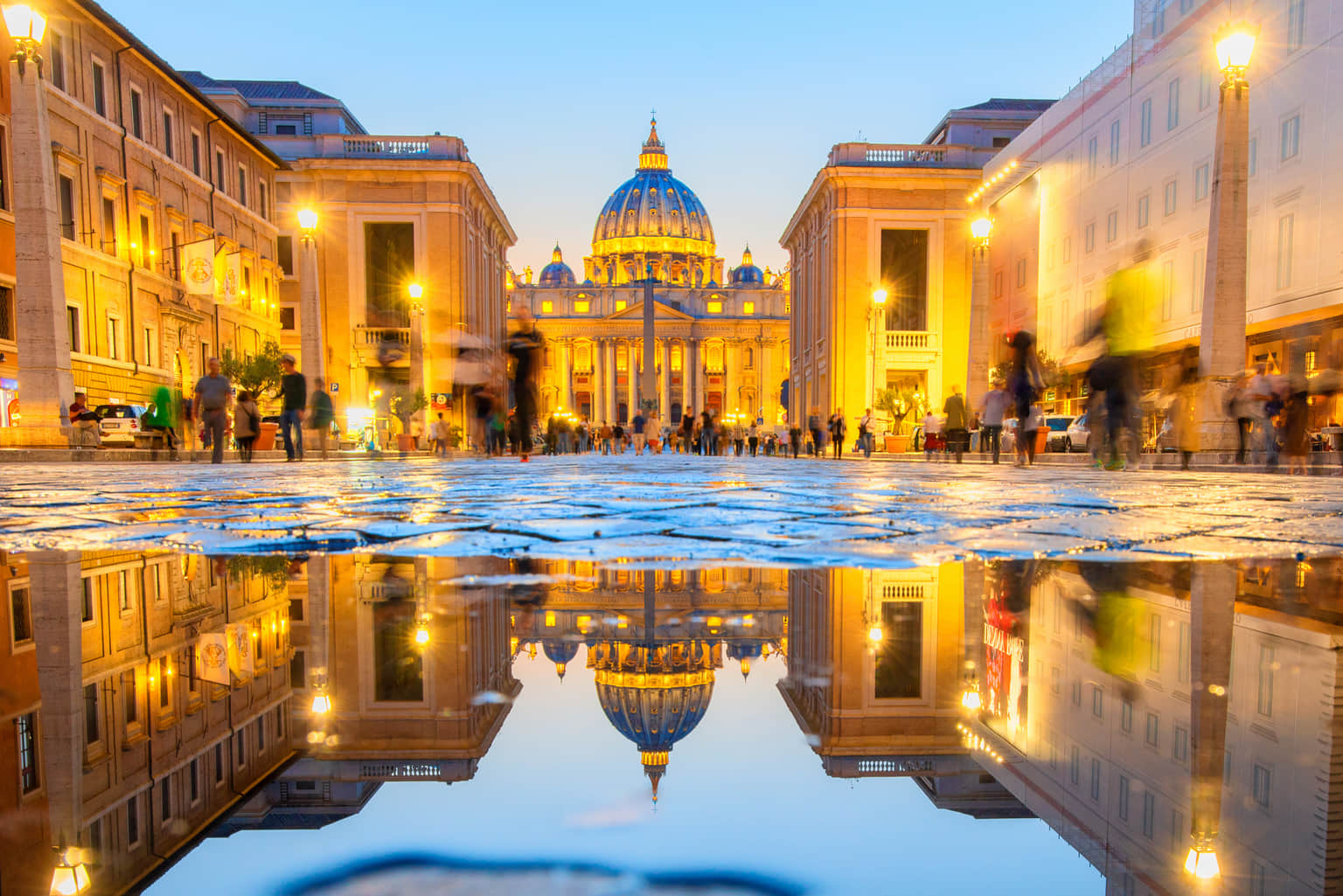
Location: St. Peter’s Basilica is located on top of Vatican Hill, across the Tiber river, at the center of historic Rome.
Opening Hours: Following are the opening hours of all the different buildings at St. Peter’s Basilica:
- St. Peter’s Basilica: 7 a.m. to 7 p.m. (April-September), 7 a.m. to 6 a.m. (October-March)
- The Cupola (Dome): 8 a.m. to 6 p.m. (April-September), 8 a.m. to 5 p.m. (October-March)
- The Vatican Grottoes: 7 a.m. to 6 p.m. (April-September), 7 a.m. to 5 p.m. (October-March)
Entry Fee: The entry fee for every building is different and the following are the details-
- St. Peter’s Basilica: Entry to this building is free.
- The Cupola (Dome): The entry fee is 8 Euros for the elevators and 6 Euros for the stairs.
- The Vatican Grottoes: The entry here is free throughout the year.
- The Vatican Necropolis: The fee for entry here is 13 Euros.
Distance from nearest Airport: Leonardo da Vinci International Airport is the nearest airport to St. Peter’s Basilica and it is located approximately distance of 21 km from it.
Click Here to Book Now: Duomo Florence Tickets
History of St. Peter’s Basilica
It is believed that St. Peter was one of the 12 Apostles of Jesus, and to honor him, Emperor Constantine decided to have a basilica built at the site where St. Peter’s grave was supposedly buried.
The construction of the basilica was started in 1506 and was finished in the year 1615. It is a three-aisled Latin church and has a dome built at the crossing, directly over the high altar, covering the shrine of St. Peter.
After almost 1000 years of its construction, the basilica started to deteriorate and was at risk of collapse. So, Pope Julius II decided to demolish and rebuild the basilica.
The new basilica was completed in almost 120 years with the help of the best architects from the Roman Renaissance and Baroque periods. Many other architects were called in for consultations about design and construction.
But the main masterminds behind the basilica are Raphael, Bramante, Donato, Michelangelo, Maderno, and Giacomo Della Porta.
Also Checkout: Places to Visit in Florence
The Building of St. Peter’s Basilica
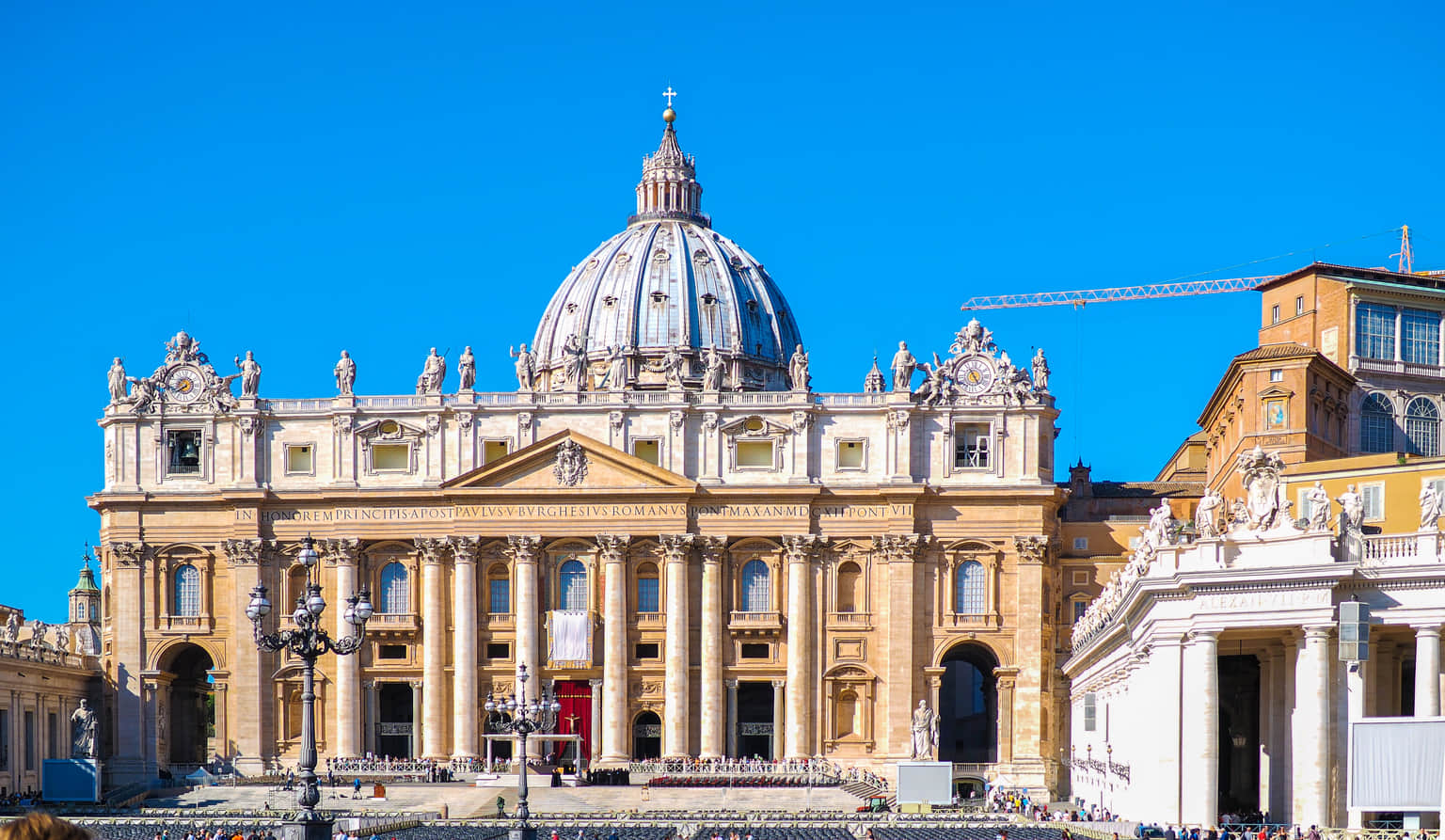
St. Peter’s Basilica is the largest church in the world, with a very impressive design. Its nave is 211.5 meters long and if we include the narthex, it becomes 694 feet. The dome has a diameter of 42.34 meters and is 132.5 meters high. It is the largest dome in the world. Carlo Maderno created the travertine front facade of St. Peter’s Basilica.
He made slight changes in the original design made by Michelangelo and widened the narthex to 114.7 meters. He also changed the location of the massive columns from the front of the building and placed them against the walls.
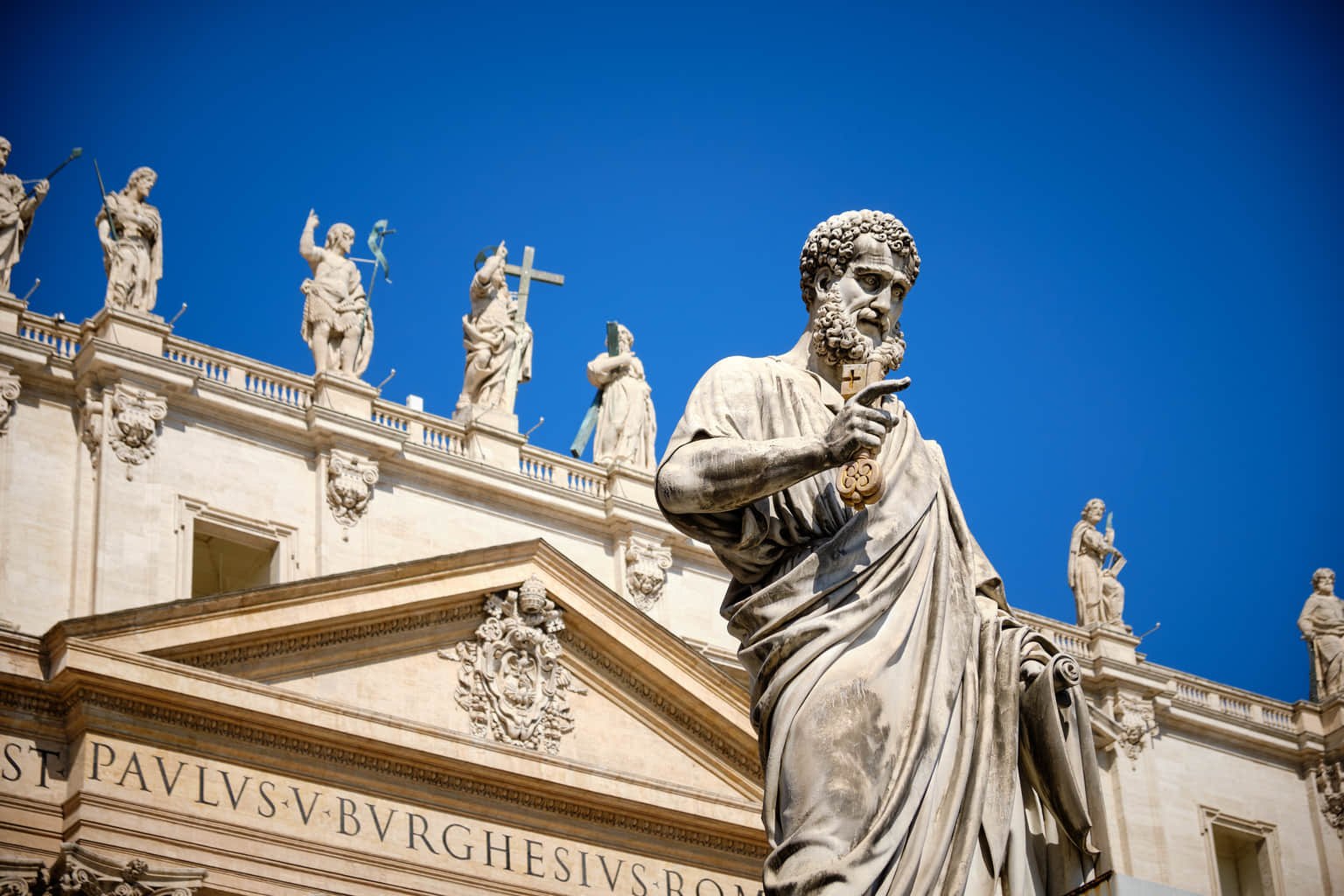
The facade itself is 45.5 meters high and has statues of Jesus, John the Baptist, and the Apostles, except for St. Peter, on top of it and the statues are 5.7 meters tall. It also has huge clocks on both sides which are supported by the angels.
Giuseppe Valadier added the clocks in the early nineteenth century and also decorated them with ornaments and a papal crest. Church bells are placed below the clocks on the left side. The narthex or the lobby of the church can be reached by any of the 5 entrances.
It has equestrian statues of Charles the Great and Emperor Constantine, both created by Bernini. The five doors lead from the narthex to the nave of the basilica. Filarete, a Florentine sculptor and architect, created a central bronze door for the old basilica in the fifteenth century. Porta Santa, the holy door, is located on the right and is opened only once every twenty-five years.
The nave of the basilica is covered by a huge central dome and coffered barrel vault ceiling. It has a surface area of 15,160 square meters and can accommodate about 60,000 visitors at a time.
The catholic church was very wealthy in the sixteenth and seventeenth centuries.
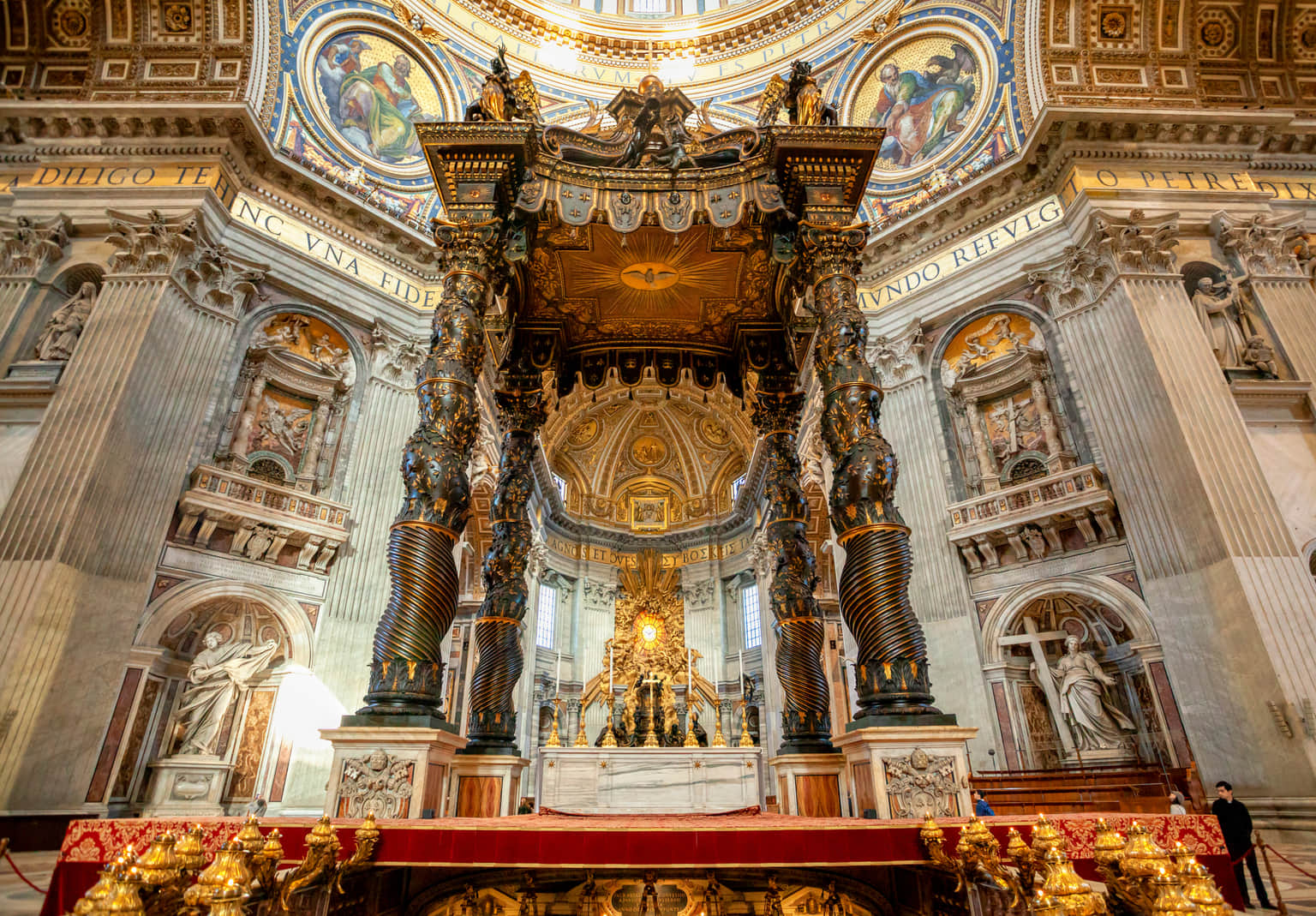
The nave also has many large monuments, and many of them were created by the greatest artist world has known, Gian Lorenzo Bernini. There is an enormous bronze baldachin over the papal altar, which is twenty-six meters in height and again the work of Bernini. It is one of the main attractions for visitors from all around the world.
The bronze used in creating the Baroque masterpiece was taken from the ceiling and pediment of the Pantheon. The marble columns that adorn the crypt of the old basilica were used as an inspiration for the spiraling columns in the nave of the new basilica.
The confession or the burial crypt, which is the presumed grave of St. Peter, is located in front of the papal altar. A balustrade with ninety-five bronze oil lamps encircles the confessio, which is located right below the beautiful dome. The four huge pillars support the colorful vaulting of the dome with sixteen ribs which is an enigmatic view for the eyes.
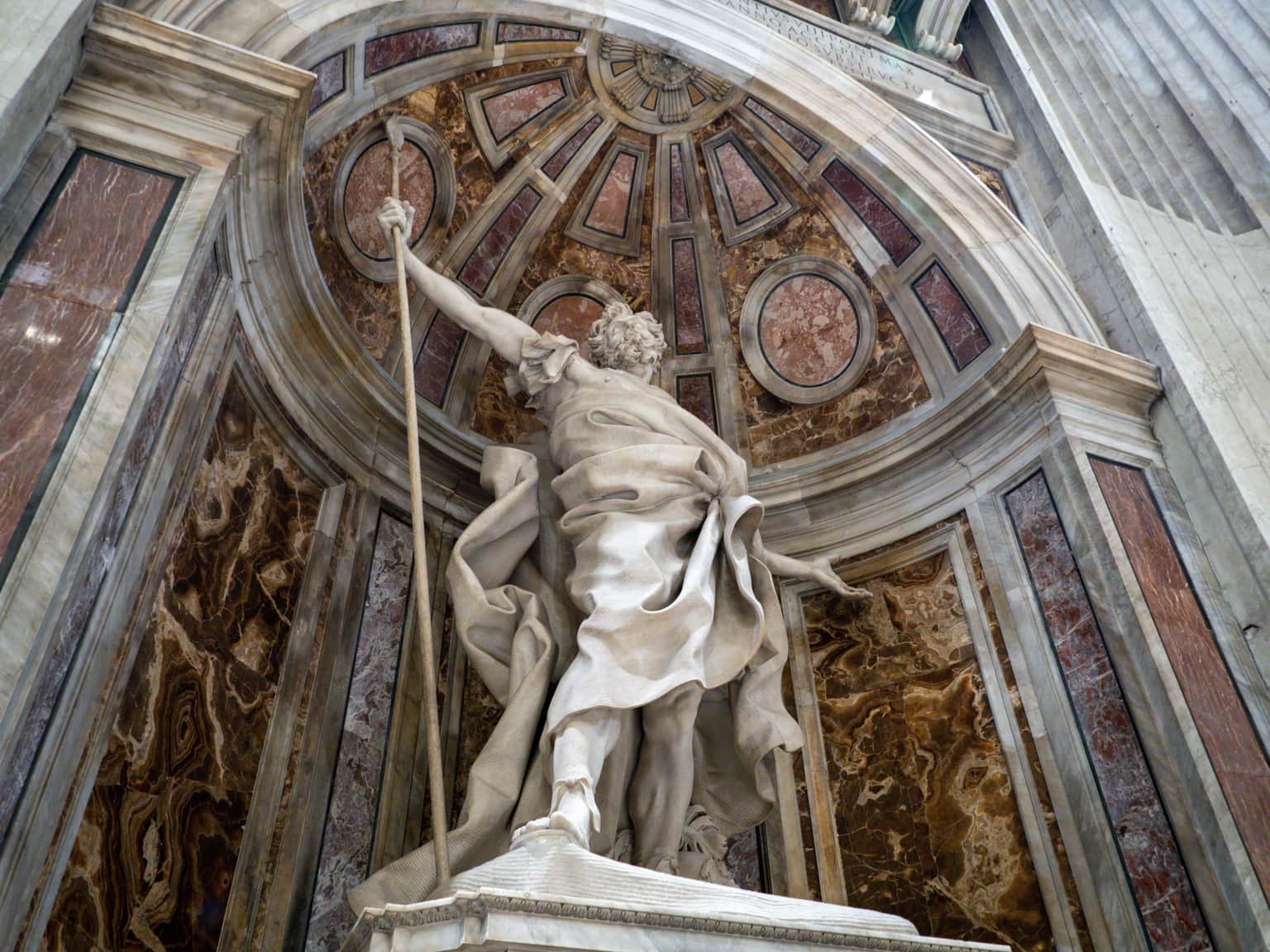
The point where the pillars meet the dome creates a triangle shape and is adorned with evangelists depicting mosaics. It has sixteen windows and numerous lanterns below the cornice for perfect lighting. Huge niches are built in the pillars and they hold statues of Saint Andrew, Saint Veronica, Saint Helena, and Saint Longinus. All these statues are 5 meters in height.
Bernini created the Saint Longinus statue and the rest of them are the creations of the students and assistants of Bernini. All the statues are placed on pedestals as tall as the statue itself. Loggias have also been built above the niches and they hold relics that are associated with the saints.
The pillar of the Longinus statue has a backdrop of St. Peter’s bronze statue. This statue is presumed to be the work of a thirteenth-century sculptor and architect, Arnolfo di Cambio. The Cathedra Petri, which is supposed to be the chair of St. Peter is located in the apse of the basilica and is decorated with Baroque work.
Numerous angels surround the large oval window just above the throne, giving it a majestic look. The chair encapsulates a bronze throne, with reliefs supported by the fathers of four churches. The Eastern church is represented by Athanasius and Johannes, and the Western church is represented by Ambrose and Augustine.
On the right side of the throne, there is the tomb of Pope Urban VIII and it was created by Bernini. On the left side is the tomb of Paul III, created by Giacomo Della Porta. Besides many other tombs and monuments built in the basilica, there is a monument of Alexander VII, created by Bernini, as is depicted as praying in front of a skeleton with an hour-glass in its hands.
The other statues around the skeleton represent virtues. The tomb of Innocent VII is also there in St. Peter’s and it was sculpted in the year 1498 by Antonio del Pollaiolo. It is the one and only papal tomb transferred from the original basilica.
Pieta, the most famous monument in the basilica was created by Michelangelo in 1499-1500. It is a marble sculpture representing young Mary holding her dead son in her arms. It is the only work that the artist, Michelangelo, has signed after people started attributing his work to other artists.
A beautiful and colorful marble pattern has been laid down on the floor of the basilica. The red porphyry disc which is located near the central door was placed at the front of the main altar in the old basilica. Many emperors like Charles the Great were crowned, standing on the disc. There are many bronze markings comparing the size of this church with others.
The entrance of Museo Storico-Artistico, meaning entrance not free, is in the front of the left transept. It is also called the Tesoro or the treasury. It displays various historic crucifixes and objects from the old church.
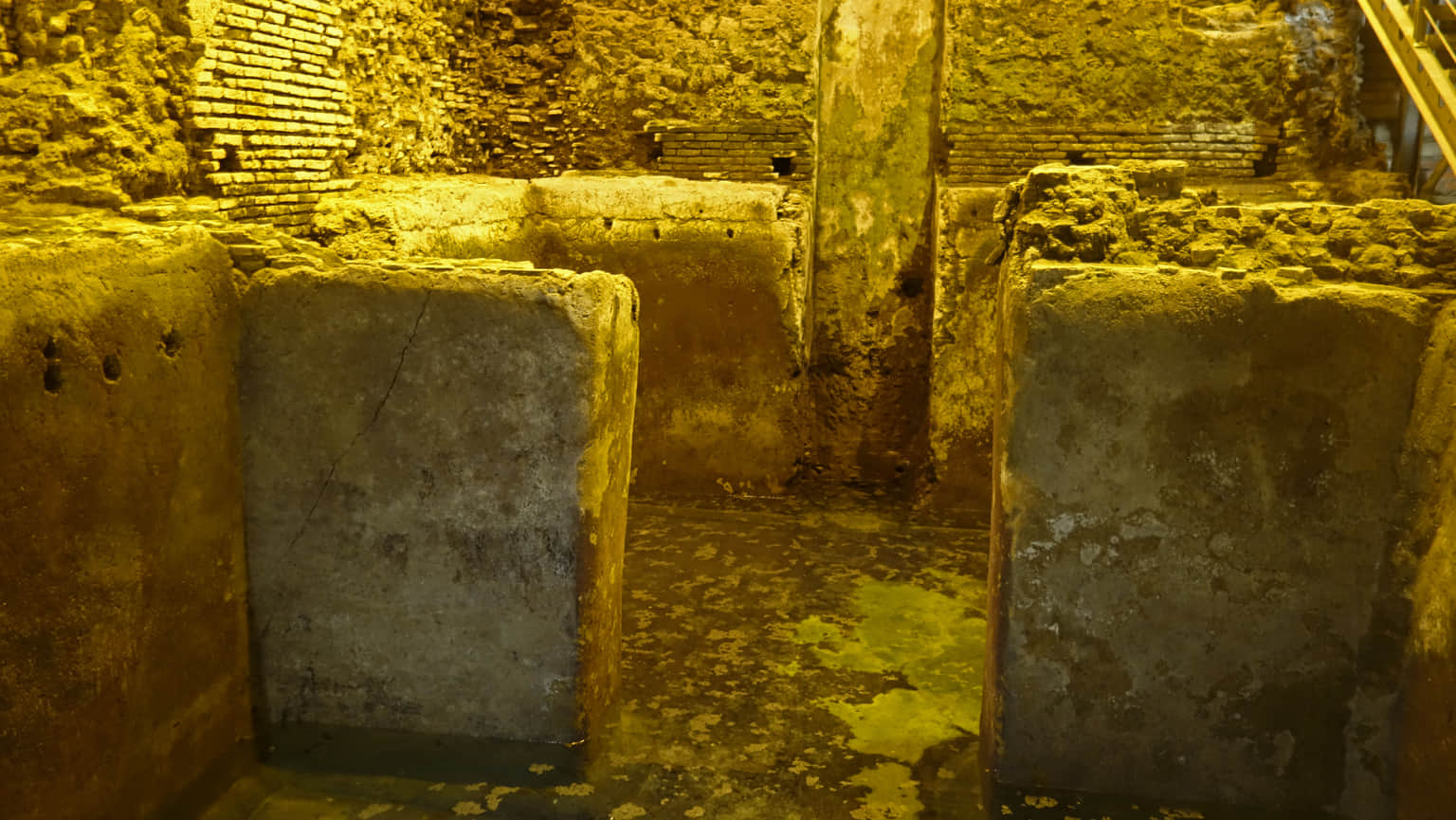
Sacre Grotte or Grotte Vaticane, a necropolis, is located below the nave of the basilica, and it has graves of more than 100 popes in there. It is also open for visitors and can be reached through the stairs near the statue of Saint Longinus.
Also Read: Museums in Florence
The Dome and Viewing platform
The most majestic part of the basilica is its dome, which is 42.34 meters in diameter. Michelangelo is the designer of this masterpiece and it rests on four massive pillars that are five-sided. There is a cylindrical drum on top of the pillars and it has sixteen large windows it also supports the ribbed vault.
There is a huge lantern at the oculus, where all the ribs in the vault come together. The double Corinthian pillars decorate the outer side of the drum and the lantern. At the base of the lantern is a platform that provides an unparalleled view of Rome.
The viewing point can be reached either by elevator or stairs at a cost, and the stairs are of course cheaper. There is a roof terrace at the outer foot of the dome. The visitors can take a walk on the terrace and enjoy a closer look of the dome.
A bird’s eye view of the church’s interior can also be enjoyed from the galleries inside and the galleries have a long, spiraling, and narrow staircase, which can be used to reach the dome top. The stairs have an entry fee and an uneasy climb, but the view from up there is magnificent.
Also Checkout: Things to Do in Rome
Facts About St. Peter’s Basilica
There are some facts about St. Peter’s Basilica that make it an even more interesting pilgrimage and tourist site in the world.
1. The basilica has two lower levels, the first one is Vatican Grottoes and which is a huge underground graveyard with tombs of 91 popes buried in it. The second level or the level below it is called the Vatican Necropolis and it contains the tomb of St. Peter. Out of all the 91 tombs, the Vatican Grottoes houses only three women's tombs.
2. The three women entombed here are Queen Christina of Sweden, Queen Charlotte of Cyprus, and Agnesena Colonna Caetani.
3. The holy door in St. Peter’s Basilica is usually cemented shut and is opened only once every twenty-years i.e., for Jubilee Years. All the time besides this, they are prevented from being opened, even accidentally.
4. The most famous work of Michelangelo, Pieta, is protected by bulletproof glass inside St. Peter’s Basilica. It is ruined to some extent after a visitor once attacked it with a hammer and tried to destroy the sculptor.
5. Michelangelo carved this beautiful monument from a single slab of marble. He signed his name over the chest area of Mary after hearing rumors of other artists getting attribution for his work.
6. There are 140 statues of saints, standing on the colonnades, in the courtyard outside the basilica. All these statues were placed here in the year 1670 and are 3.10 meters tall.
7. The smallest army of the world, the Swiss Guard was formed in the year 1506 to protect the Pope, The Vatican, and St. Peter’s Basilica.
8. The basilica has been the center of Christianity since its construction.
Suggested Read: Churches in Rome
Tips for visiting St. Peter’s Basilica
Some important tips to make your trip comfortable and enjoyable:
1. If you are visiting St. Peter’s Basilica for the first time, get a guide for yourself or rent an audio guide from inside the kiosk to learn important facts and details about every part you see.
2. Make sure that you follow the dress code, otherwise, you will be denied entry into the basilica.
3. Many parts have an entrance fee and application procedures, so be prepared in advance or ask your guide to arrange things for you in advance.
4. There are also some parts for which you will need to get in touch with the Excavations Office and apply for a visit. The applications should be made a minimum of 2 months prior to the actual trip.
Suggested Read: Famous Fountain In Rome



.jpg?w=1536&q=65&format=auto)