Location: The museum is located near Minar Functional Hall on Salar Jung Road in Darulshifa besides the southern bank of the River Musi.
Timings: Except for Fridays, the museum is open every day from morning 10 AM to the evening at 5 PM.
Entry fee: Students and children below the age of 18 are exempted from entry fees. All others need to pay an amount of Rs 20 as the entry fee. Foreign tourists are charged Rs 500 for 1 person.
Visitor's Facility: Permits are available for the museum library. There are reading rooms, cafeteria, souvenir shops, drinking water and restrooms for the visitors. The museum offers a wide range of reading opportunities for scholars including foreign magazines.
Parking Facility: Paid parking facilities are available near and within the museum premises.
Distance from Hyderabad bus stand: The distance between the Hyderabad bus stand and the Salar Jung museum is 1 km or 0.6 miles. It takes about 6 mins to travel by bus.
History of Salar Jung Museum
The major contributor to the art collections in Salar Jung Museum is Mir Yousuf Ali Khan. He belongs to the Salar Jung dynasty and is popularly known as Salar Jung III. The trend of contributing innumerable artifacts had been started by his ancestors and he diligently carried out the noble act.
He spent a substantial amount of effort and money on collecting exclusive objects from various parts of the world. The collections were stored securely in Diwan Deodi which was the ancestral palace of the Salar Jung dynasty. After he left for his heavenly abode, the then Chief Administrator of Hyderabad Sri M.K. Velodi created a museum with the innumerable collections.
Dr. James Cousins, a world famous art critic, was entrusted with the responsibility to sort the items from the different Salar Jung palaces to be kept in the museum. It was opened on 16th Dec 1951 by Pandit Jawarharlal Nehru and is considered the third largest national museum in India.
Structure of Salar Jung Museum
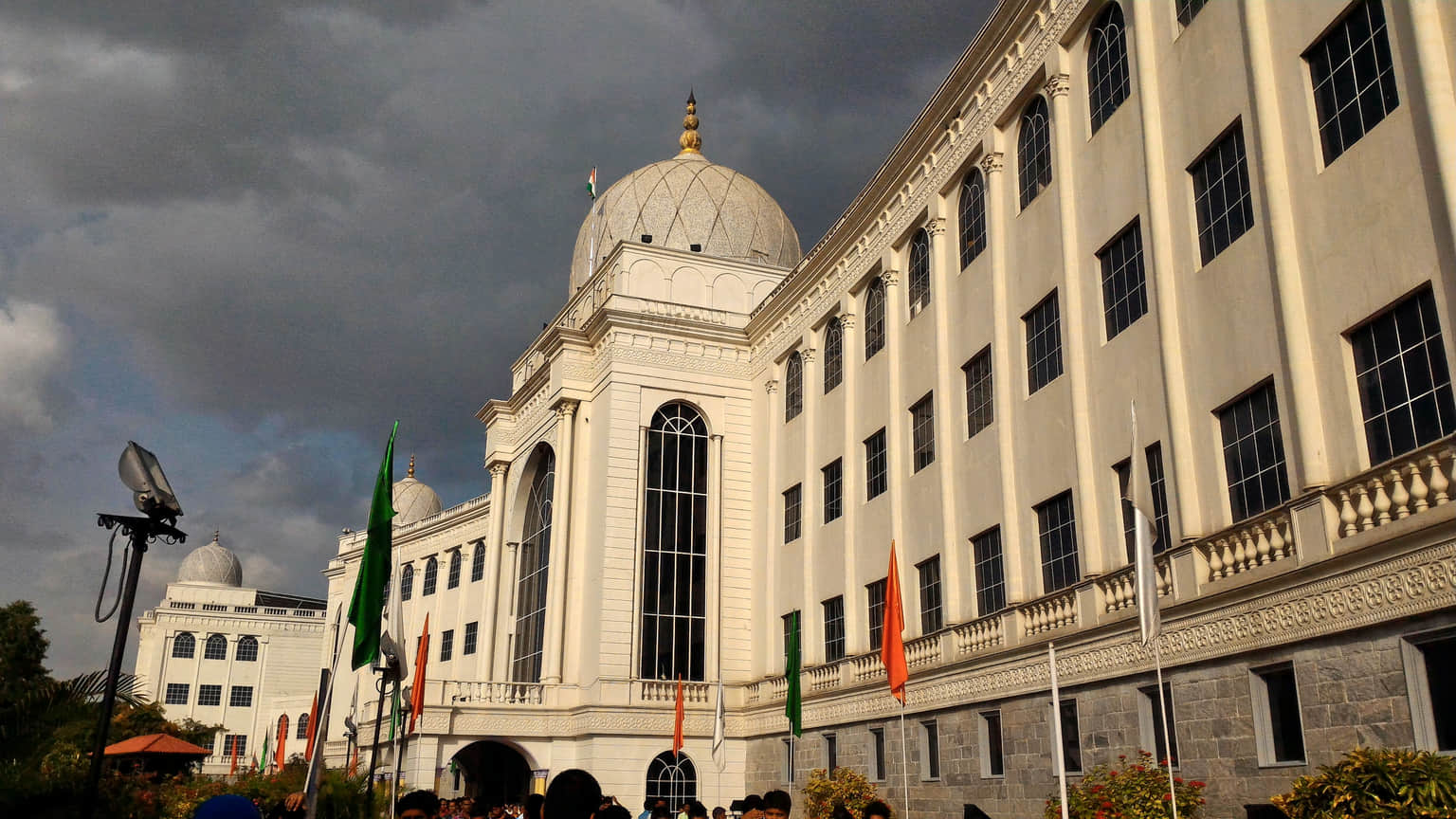
The museum consists of three buildings – the Western block or the Mir Turab Ali Khan Bhavan, the Eastern Block or the Mir Laiq Ali Khan Bhavan and the Indian or the Central Block. There are 38 galleries across two floors of which 27 are in the Indian Block, 7 in the Western Block and 4 in the Eastern Block.
The galleries contain the masterpieces and artifacts collected from the various countries of the world.
The structure of the building is magnificent and its architecture portrays elegance and richness. The museum is semicircular in shape with a protruding white structure. There are several other sections inside the museum.
The photo section, display section, education wing, and chemical observation laboratory are the key ones. The museum also has a reception counter for any assistance and help. There is a sales counter too for the purchase of any souvenirs and mementos.
Collections at Salar Jung Museum
The collections in the museum comprise of objects from all over India and the countries from Europe and Asia mainly. There are approximately 47000 printed books and 9000 manuscripts for the scholarly people to immerse into the richness of literature.
It is an astonishing experience for art lovers to be fascinated by the 43000 art objects inside the museum. The British musical clock of the 19th
century, the marble statue of Veiled Rebecca, Ivory chairs or Tipu Sultan, a knife used by Noorjehan, Jahangir's dagger are some of the exquisite collections kept in the museum.
Medical journals and some rare paintings from ancient India too adorn the museum.
Galleries at Salar Jung Museum
The museum has several galleries, the key ones are
Founders Gallery which contains portraits and paintings of the prominent persons of the Salar Jung dynasty
The European Galleries of art, paintings, porcelain, glass, bronze, marble statue, clocks, and furniture. The galleries showcase unique collections from Europe. The wooden statues of Mephistopheles and Margaretta and the famous British Bracket clock are the prominent ones.
The Indian Galleries of South Indian bronze, Indian textiles, and sculptures, Indian miniature, and modern paintings, ivory objects, arms and armors, minor arts of South India and the Jade gallery. Bronze statues and figurines of Gods and Goddesses and objects of worship as old as the 12th
century embellish the galleries.
The other galleries are the Bidri gallery of Tahnashin and Zarbaland, the middle eastern carpets from Persia, the Egyptian, Syrian and the Chinese collections, the Arabic and Persian manuscripts and the varied collection of art and sculpture by Sino-Japanese artists.
Salar Jung Museum Library
The library contains rare collections of about 60,000 printed books and 8,000 manuscripts in numerous languages. The manuscripts are available in various kinds of writing media like parchments, textiles, wood, stone, palm leaves, glass.
The content of the books and manuscripts cover a wide variety of concepts related to science, culture, medicine, music, sports etc. Religious manuscripts can also be found in the library.
The printed books are mostly in English and others are in the Oriental section. Amazing works of skilled calligraphers and artists are displayed in the library. Some have used gold, pearl and beautiful colours to bind and ornament the books.
Interesting Facts about Salar Jung Museum
The key interesting facts about the museum are:
1. It is the third largest museum in India consisting of massive 38 galleries spread across 2 floors. It has the record of hosting the largest collection of antiques and exclusive objects by a single person in the world.
2. The building provides an aura of historical significance with the artistic balconies, curved stairs, and the huge cellars. The Indian miniature paintings are splendid as well as the arts in the French gallery. The double statue of Mephistopheles and Margaretta carved in wood demands high appreciation.
3. The big British musical clock attracts the attention of the visitors with its beauty and grandeur. Another interesting fact is the Quran collection in gold and silver calligraphy. The Veiled Rebecca marble statue carved by the famous Italian artist Benzoni, glitters wonderfully in the gallery.
4. Several arms and weapons of Tipu Sultan and the Mughal rulers will leave you spellbound.
5. The Jade gallery contains an astonishing collection of luxurious objects used in ancient times.
Places to Eat near Salar Jung Museum
Multiple restaurants are present near Salar Jung Museum within a distance of 0.2 to 0.4 km
1. Kaficko: It provides multiple cuisines of Europe, France, Italy, and other International countries. It has both take out and dining options. Located in a serene place, it has an outdoor seating arrangement as well. The coffee is something you must not miss at the restaurant.
2. Shadab Hotel: The restaurant specializes in Indian and Asian delicacies. Special veg and halal options are also available. The special feature of the restaurant is the Mutton biryani.
3. Classic Ice-cream: The ice-cream parlor has good varieties of tastes and flavors at reasonable prices. The seating arrangement is good and the ambiance is also nice and relaxing.
4. Al Khader Fruit salad and juice center: The juices and salads in the center are healthy, nutritious and delicious. The shop is quite famous among locals and tourists. The tastes are wonderful and are appreciated by the visitors.
5. Gulzar Sweets: If you are a sweet lover then Gulzar sweets is a must visit. The sweets are fresh and tasty. The prices are also moderate. You can enjoy the famous Kaju Katli and Ajmeri Kalakha sweets in the shop. You can eat at the shop or pack for your home.
Tips before visiting the Salar Jung Museum
There are certain things you must remember before visiting the Salar Jung museum:
1. Smoking is strictly prohibited inside the museum premises.
2. You must not touch and tamper with any of the objects displayed in the museum.
3. Cellphone must be avoided while visiting the galleries. There are separate charges for using still cameras.
4. Sharp objects like knives, razors, scissors and even lighters, matchboxes are not allowed inside the museum
5. Dust bins must be utilized for throwing wastes.
6. A suggestion book is available at the museum to pen down your recommendations or complements.
7. Restrooms are present at various places in the museum. There are coolers inside the museum for drinking water.



_in_Hyderabad_I_IMG_7091.jpg?w=1536&q=65&format=auto)
.jpg.jpg?w=1536&q=65&format=auto)
.jpg.jpg?w=1536&q=65&format=auto)