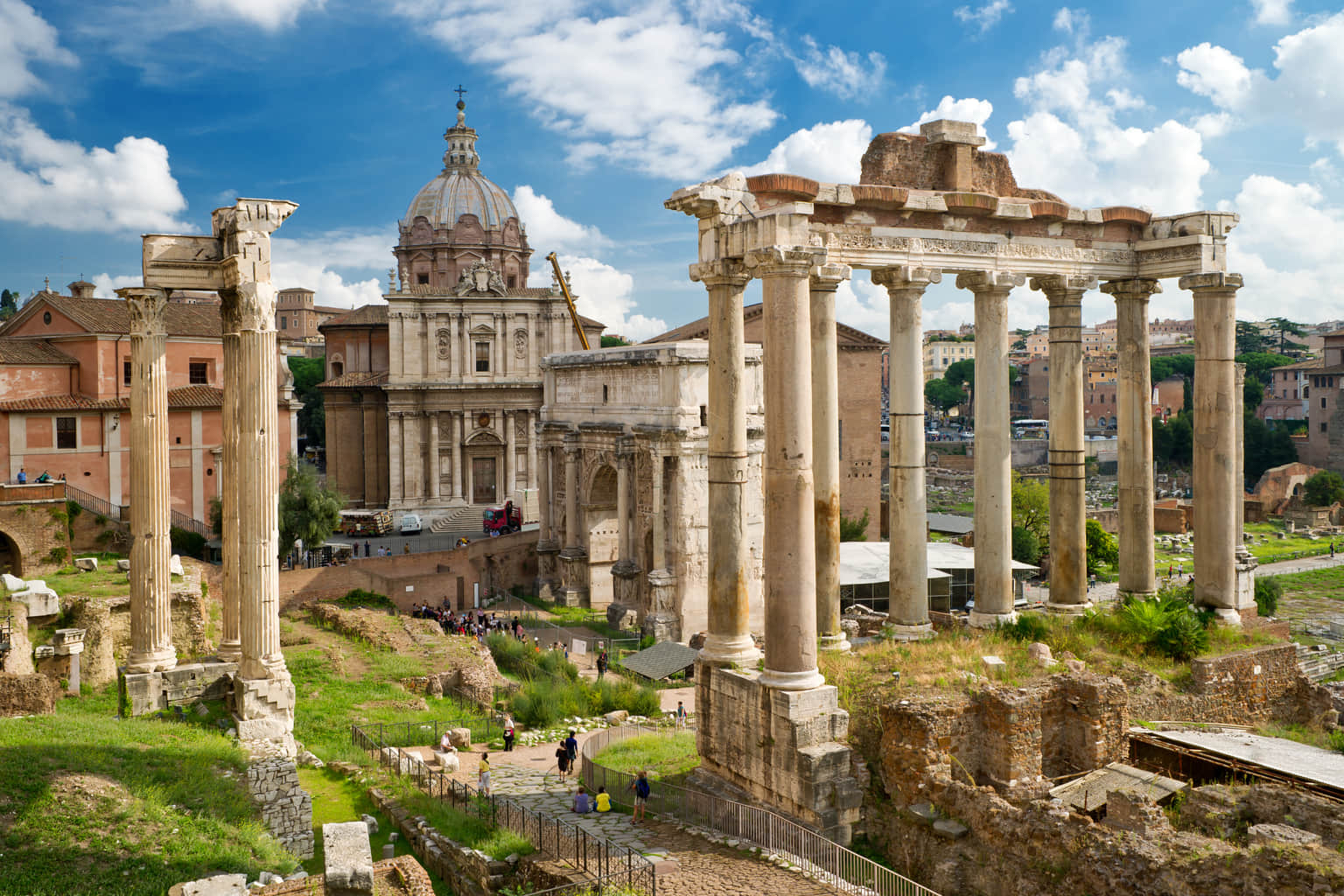
Location: Via Della Salara Vecchia, 5/6, 00186 Roma RM, Italy. The Roman Forum is located in the heart of Rome, near the Colosseum and Palatine Hill.
Opening Hours: 8:30 AM to 7:00 PM daily. Closed on 25th December and 1st January every year.
Entry Fee: Combined tickets to visit the Colosseum, the Roman Forum, and the Palatine
Adults: 16€ (valid for one day) 18€ (valid for two consecutive days with one access to each location)
European Union members (18 – 25 years old): 2€
Children from across the world (less than 18 years), seniors (over 65 years), and members of the EU: Free
Distance from Nearest Airport: 22.3 kilometers from Rome Airport (FCO)
Click Here to Book Now: Duomo Florence Tickets
History of the Roman Forum

Ancient Rome was founded in 753 B.C. and named after its first king, Romulus. As per traditional belief, an alliance formed as a settlement of combat between Romulus and his rival Titus Tatius laid the foundation of the Roman Forum. The low-lying marshland between Palatine Hill which was occupied by Romulus and Capitoline Hill which was ruled by Titus was selected as a neutral meeting point. The world’s first-ever covered sewage system, the Cloaca Maxima was then built in 600 B.C. to drain the wet marshland to make it functional.
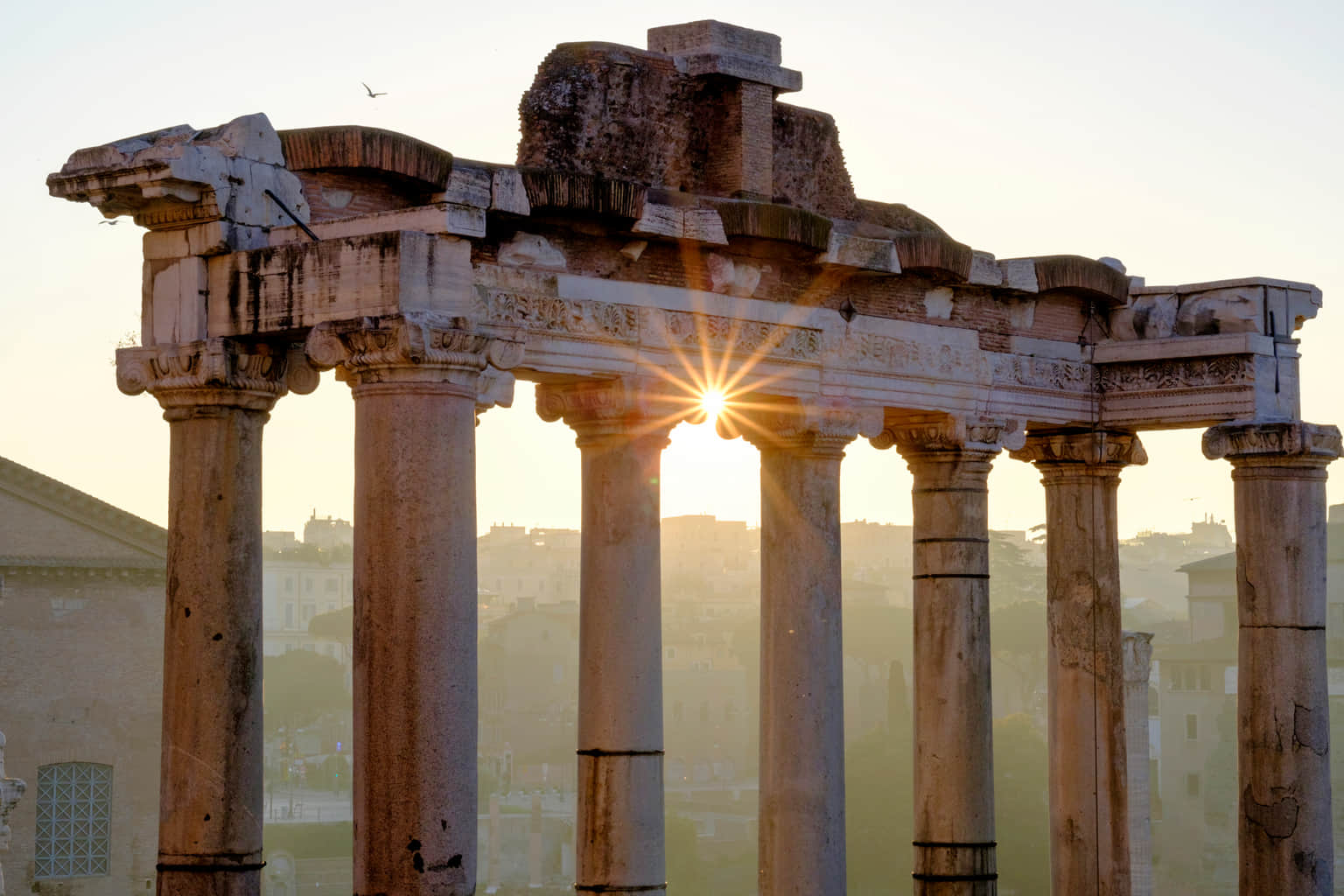
The Forum initially served as a marketplace (known as the Forum Magnum) but it became more functional around 500 B.C. It grew over time into a versatile center for key political, religious and social affairs. Construction of temples and other sacred buildings started in the Early Republican period. One of the earliest and most prominent constructions was the Temple of Saturn in 498 BC. Later, around 44 BC the Curia and Comitium were built as complexes for political gatherings. The Forum gradually became the hub of everyday functions such as conducting elections and criminal trials, delivering public speeches, arranging religious ceremonies, carrying out processions and even gladiator matches.
As the Roman Forum crumbled after the fall of the Roman Empire, its significance was lost and it was buried under debris. In the middle ages, it was used as a cattle field known as “Campo Vaccino”. Then the interest of several artists and architects in the Forum during the 17th to 19th centuries led to the rediscovery of its glory. The Arch of Septimius Severus was excavated in 1803 by Carlo Fea, which led to the government-regulated clearing of debris later on.
Also Checkout: Places to Visit in Florence
Roman Architecture of Roman Forum

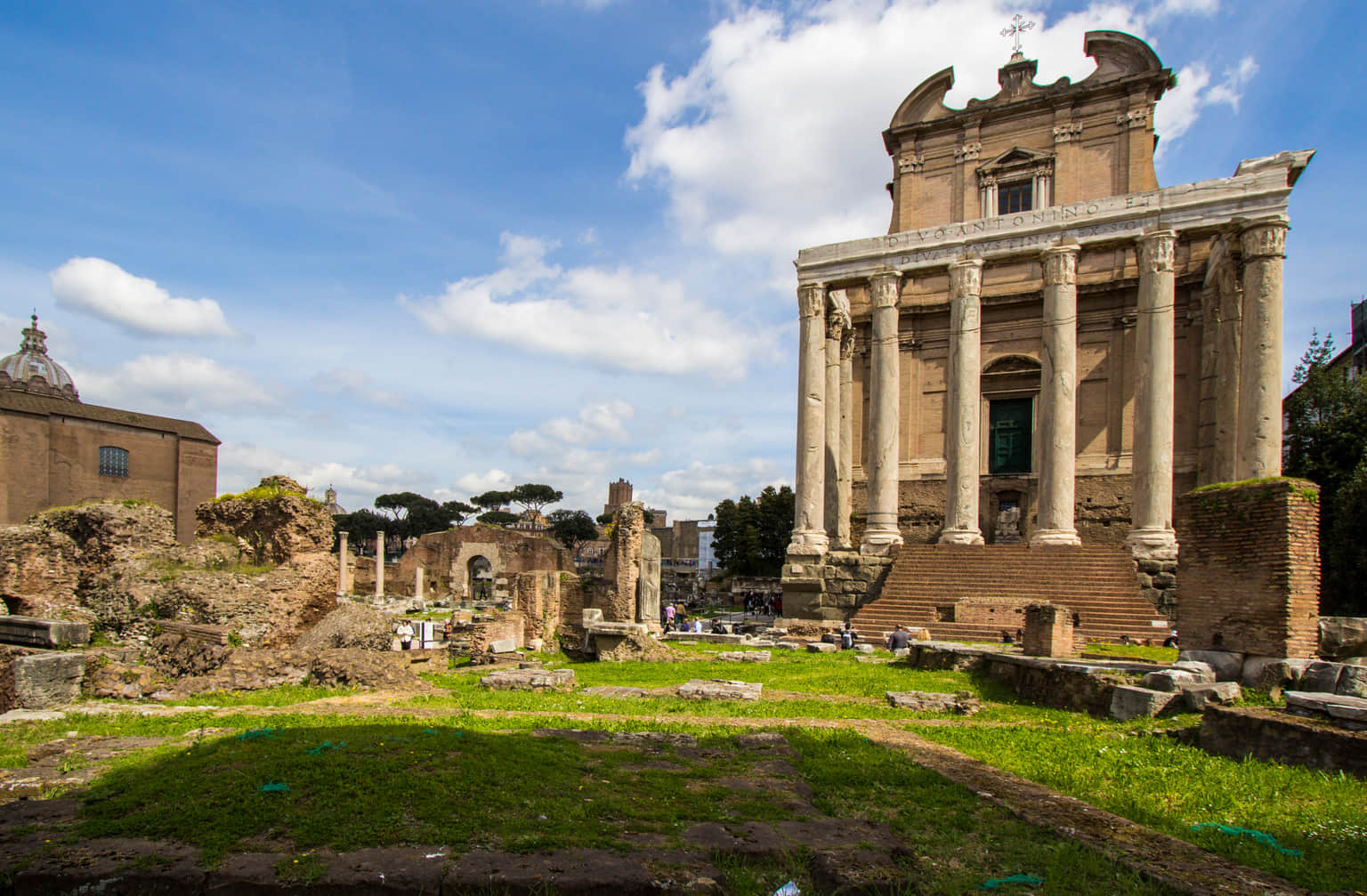
The architecture of the Roman Forum symbolizes majesty and grandeur. It featured splendid temples, shops, buildings, statues, and allegorical monuments. The buildings were inspired by classical Greek architecture but were reconstructed several times. They were rectangular, circular, and trapezoidal shapes and were built using bricks, concrete, and travertine.
They rested on podiums, had wooden roofs and were clad in marble. The front of these buildings had freestanding columns and there were narrow porticos around them. This construction form was known as “prostyle hexastyle”. Though the designs were influenced by different eras, typical Roman-style structures including basilicas, domes, arches, baths, and amphitheaters were prominent.
Also Read: Museums in Florence
Important Sites in the Forum

In addition to the important buildings and sacred temples, the Forum was ornamented by statues and motifs. These were dedicated to gods, goddesses and great men of the empire. Their remains are archaeologically significant and are a must-see during your visit to the Roman Forum.
1. The Via Sacra: The main and most sacred street of Ancient Rome, The Via Sacra was home to some of the most important religious sites of the Forum. It leads to the Colosseum from the top of the Capitoline Hill passing through the Forum. It was the prime route for triumphal processions and sacred ceremonies and is still the oldest surviving road in Rome.
2. The Rostra: A large elevated platform built in the 6th century, The Rostra was an honored spot during the republican and imperial periods. It was used by Roman politicians, magistrates, advocates, and prominent orators to address the people.
3. Comitium: The Comitium was a large open-air public meeting space in the northwest corner of the Roman Forum. It was constructed for use as a political assembly area and was one of the most important architectural compounds. It held religious and political significance as it was the main spot for decision-making and communication.
4. Regia: The Regia was the legendary royal residence of the Roman King Numa Pompilius. It was constructed on the edge of the Forum along the Sacra Via and was considered a sacred space. It was later used as the office of the Pontifex Maximus, the chief priest who was considered the highest religious official of Rome. It housed the archives, state calendars, records, and annals that were used by the pontifices. The building was destroyed and rebuilt several times.
5. Tabularium: The Tabularium was built by the consul Quintus Lutatius Catulus in 78 B.C. for keeping records and storing documents. The towering structure was positioned on the front slope of Capitoline Hill and contained offices of important city officials. It is one of the well-preserved structures of the Forum that provides astounding panoramic views of it.
6. Lapis Niger: The Lapis Niger also known as ‘Black Stone’ is a large slab of black marble which covers an inaccessible underground room. The room is believed to be the tomb of Romulus, the first king, and founder of Rome and was venerated as a shrine by the people of Rome. Paved in the Comitium, it is accompanied by a tufa column which has the oldest known Latin inscription on a monument. The spot has great significance and was considered sacred by the Romans.
Also Checkout: Things to Do in Rome
Things You Didn't Know About the Roman Forum

The Roman Forum was the activity spot of Ancient Rome and had lied buried for centuries. Its ruins have millions of untold stories that are unfolded time and again by historians and archaeologists. A few interesting facts about the Roman Forum are as follows:
1. Marshland was dried up for constructing the Forum: The Forum had been built on a swampy Etruscan burial ground. The Cloaca Maxima which was the world’s earliest sewage system was built around 600 BC to drain the water from the low lying lands into the Tiber. It is visible near the Ponte Palatino and if rumors are to be believed, a stream of water still trickles down it.
2. Buildings were constructed over ruins: The Roman Forum has remnants from several centuries due to the common Roman practice of building over earlier ruins.
3. The Roman Forum was huge: It covered an area of 250 meters x 170 meters.
4. The Forum was in use for centuries: The forum was used by Rome’s elite and people for over 1400 years starting from 800 BC to 600 AD.
5. Importance of The Curia: It was because of The Curia or Senate House that the Roman Forum was given importance over the other Fora in Rome.
6. The Forum housed the largest temple of Rome: The Temple of Venus and Rome, built on The Forum in 135 AD measured 100 x 145 meters. It was the largest religious structure ever built in Rome.
7. The Tomb of Romulus is hidden in the Forum: As per ancient Romans, Rome was founded by Romulus, who the Senate murdered. The Lapis Niger is believed to be placed upon his grave and the area is considered sacred.
8. Julius Caesar was cremated at the Roman Forum: Rome’s most famous citizen, Julius Caesar was assassinated and cremated on the steps of the Theatre of Pompey. The Temple of Caesar was built on the spot and was referred to as Caesar’s grave.
9. Severed heads were displayed on The Rostra: During the late Republican period, political meetings became violent and heads of defeated enemies were displayed on the Rostra. In 43 BC Mark Antony had beheaded Cicero and put his head and limbs on display.
10. The destruction started with the Fall of the Roman Empire: Most buildings of the Forum were destroyed in 410 AD when the Roman Empire was falling.
11. Construction material was plundered after the fall of the Forum: After the fall of the Roman Forum, its stones and marble were used to build other buildings and churches in Rome and its surrounding areas.
12. The excavation of the Forum took a long time: The excavation by Carlo Fea in 1803 took more than 100 years to clear the debris and is going on to date.
Suggested Read: Churches in Rome
Tips to Visit Roman Forum

1. For a stress-free visit to the Roman Forum, Palatine Hill, and the Colosseum book your tickets in advance as time slots are allotted as per availability. Avoiding queues at the ticket counter will leave you with more time and energy to observe the ruins.
2. The combo tickets for all three locations can be booked online. They are less expensive and valid for two days.
3. To understand the historical importance of the place and enjoy your visit, start from the Roman Forum, head over to the Palatine Hill and visit the Colosseum in the end.
4. To know the significance of what you are looking at, make sure to read the signs. You can also rent an audio guide or join a guided tour.
5. The Forum is in a large area and the ground is covered with uneven stones so wear comfortable walking shoes.
6. There is no shade or shelter in the Forum so be sure to carry your umbrella and plenty of water to drink.
Suggested Read: Famous Fountain In Rome
Attractions near Roman Forum
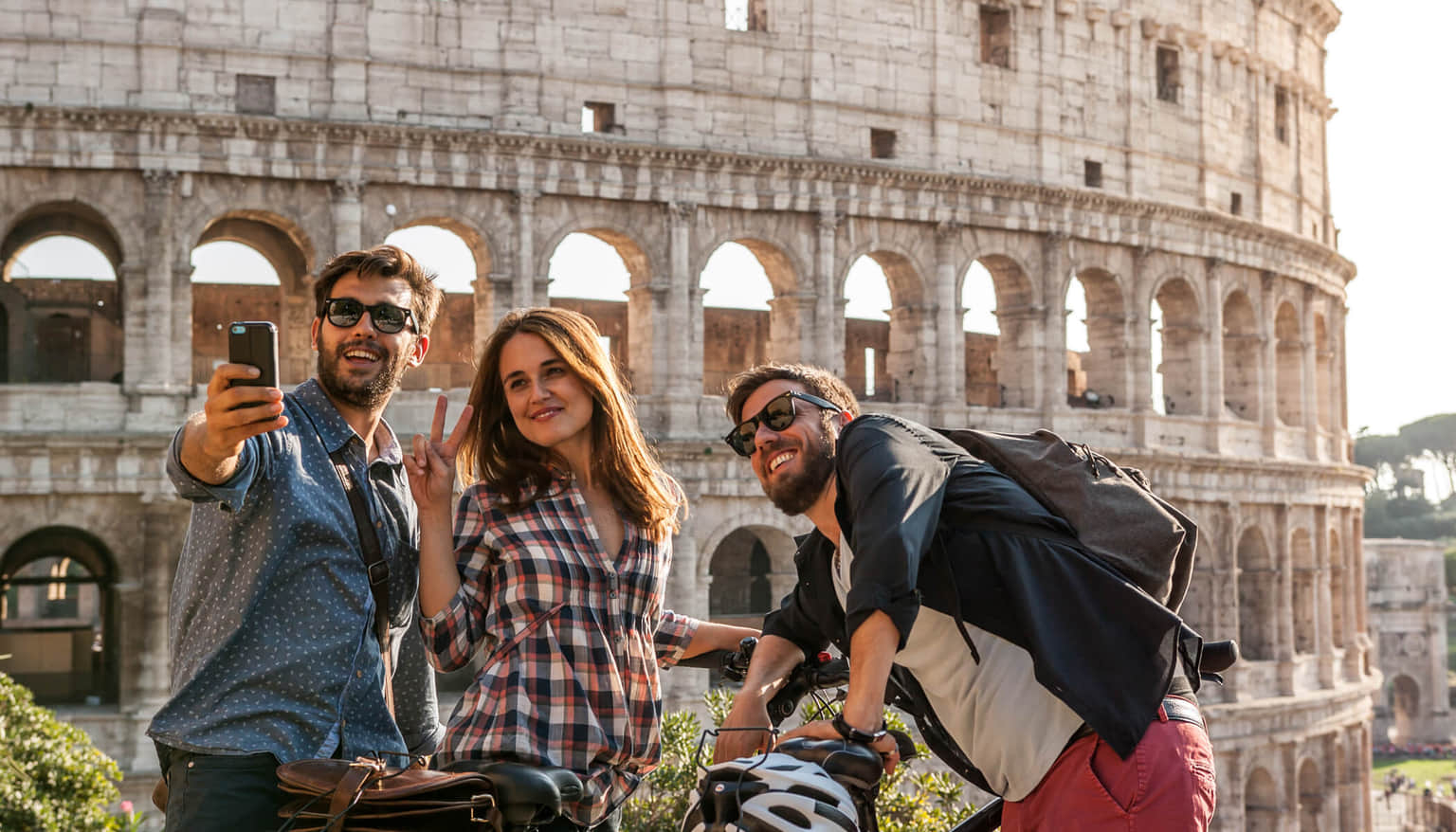
1. Colosseum: Situated to the east of the Roman Forum, the Colosseum is a popular tourist attraction as it is listed among the Seven Wonders of the World. It was constructed in 70 AD by the emperor Vespasian and officially opened by his son Titus in 80 AD.
It was the largest amphitheater built in that era and was also known as the Flavian Amphitheatre. The huge amphitheater was a freestanding oval structure made of stone and concrete. It was used for entertainment purposes and could hold around 50000 to 80000 spectators. Most of the structure has been ruined by earthquakes and plundered for construction material but it still manages to attract tourists from across the globe.
2. Forum of Augustus: One of the Imperial Forum of Rome, it is also known as the Foro di Augusto. It is located around 2 kilometers from the Roman Forum. It was commissioned by Augustus in 42 BC to provide additional space for legal proceedings and for building a temple in honor of Mars. The ruins feature a raised platform with three columns on the front and remains of the Temple of Mars Ultor, the god of war.
3. Carcer Tullianum: Set below the Church of St. Joseph of the Carpenters - XVI century, the Carcer Tullianum overlooks the Roman Forum. Built in the 7th century BC, it is Rome’s oldest prison which was also known as the Mamertine Prison in the middle ages. The prison has great archaeological significance and as per ancient tradition, it is revered as the site of martyrdom of Saint Peter and Saint Paul.
4. Trajan’s Market: Placed at the opposite end of the Colosseum, Trajan’s Market (also known as Mercati di Traiano) is considered to be the world’s oldest shopping center. Constructed in 100-110 AD by architect Apollodorus of Damascus, as a part of Trajan’s Forum. The archaeological complex currently holds the Museum of Imperial Forums or the Museo dei Fori Imperiali. The museum exhibits artifacts from all the Ancient Rome’s forums.
5. The Palatine: The centermost hill of the Seven Hills of Rome and the birthplace of the city, The Palatine Hill is situated 40 meters above the Roman Forum. During the Republican period, splendid palaces were built by the upper-class Romans on this hill. The sumptuous remains include those of Domus Flavia, House of Livia, House of Augustus, Farnese Gardens, and Hippodrome of Domitian.
6. Column of Phocas: Erected in 608 A.D., this 13.6 m tall Corinthian column was dedicated to Byzantine Emperor Phocas by Smaragdus. This isolated landmark is located near the Arch of Septimius Severus and is considered the last addition to the Roman Forum. A gilded statue of the emperor stood on top of the column which was pulled down after his death.
Do Read: Rome Monuments

.jpg?w=1536&q=65&format=auto)
.jpg?w=1536&q=65&format=auto)




.jpg?w=1536&q=65&format=auto)