Location:
Piazza Navona, 00186 Roma RM, Italy
Distance from Nearest Airport:
The nearest airport to Piazza Navona is Rome Ciampino (CIA) Airport. which is 15 km away from the Piazza. Another connecting airport close to the Piazza is Rome Airport (FCO). The distance between Rome Airport (FCO) and Piazza Navona is about 22 km. By road, you need to travel about 30.7 km to reach Piazza from FCO.
Timing:
Though the Piazza is always open for the visitors, early morning and evening is a good time to visit the piazza to avoid overcrowding. To enjoy the Piazza most, consider arriving between the opening hours of 7 am – 10 am or can even come between 5 pm – 8 pm.
Entry Fee:
There is no entry fee to visit Piazza Navona; this is open to all and requires no ticket.
Click Here to Book Now: Duomo Florence Tickets
History of Piazza Navona

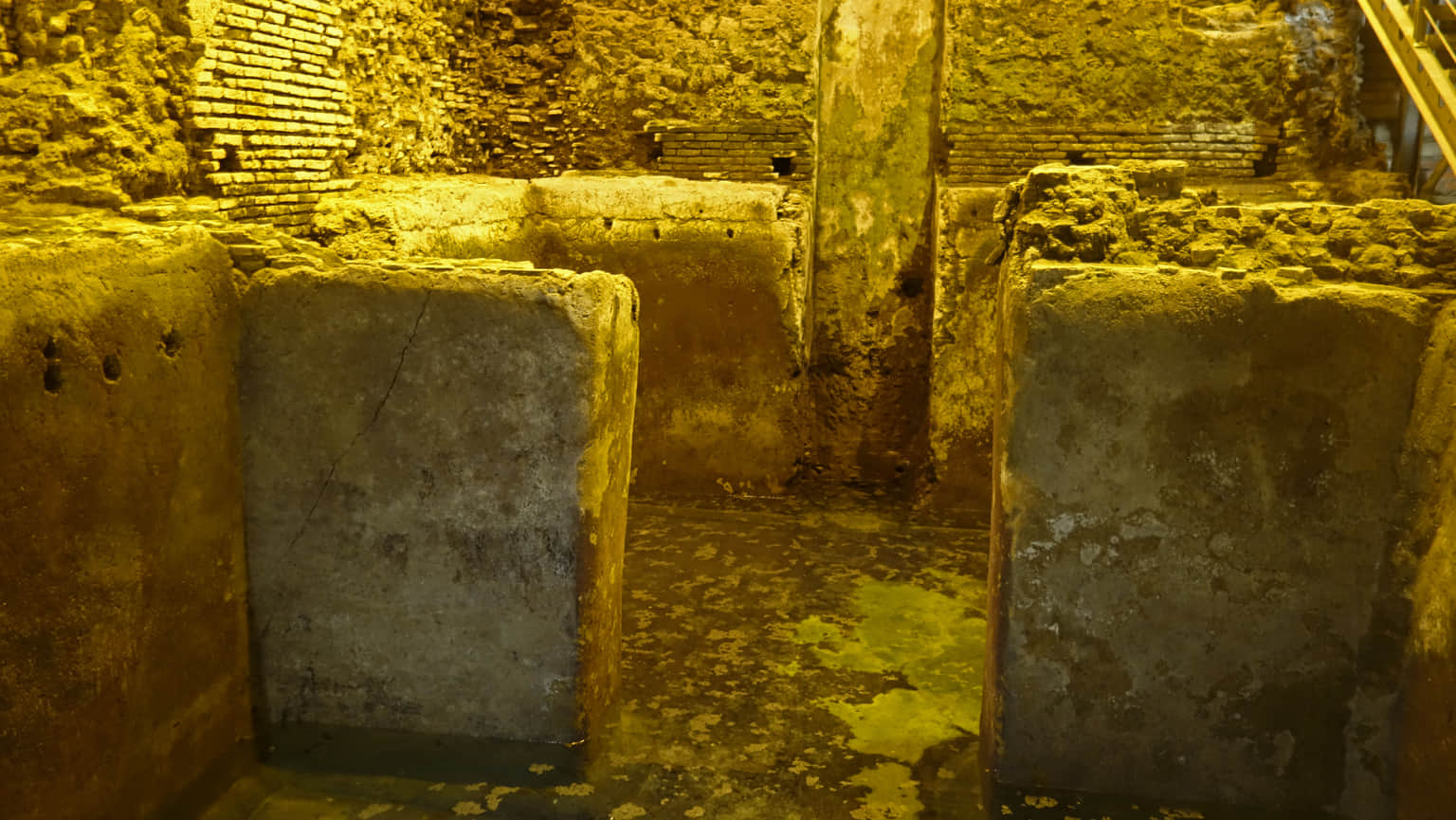
Before the 15th century, at the place of Piazza Navona, there was an open space of stadium, “Stadium of Domitian” built in the 1st century AD. In the last years of the fifteenth century, the stadium was transformed into the Navona square using Baroque Roman architecture and art under the supervision of Pope Innocent X and family.
The remnants of the ancient stadium are still present in different parts of the piazza. From 1652 to 1866, the piazza was a great cultural site hosting theatrical events and other entertaining activities. In the middle of the 19th century, the pavement level of the Piazza was raised.
Then a Christmas market used to be held in the piazza square. During the sixteenth and seventeenth centuries, three lavish fountains were built up in different directions of Piazza. The fountains were modified in different periods of history and till date attracting visitors from different corners of the world.
Also Checkout: Places to Visit in Florence
What makes Piazza Navona Famous

Piazza Navona is quite popular for its luxurious scenic beauty and that makes it interesting to the movie makers to exhibit in their films. The piazza is featured in a number of movies; some of the notable instances are
- Dan Brown's thriller movie “Angels & Demons”, in which the Fountain of Four Rivers is exhibited as one of the Altars of Science. Apart from the fountain, the southern section of the piazza has featured in several scenes of the film.
- The fountain of four rivers was also in the film Coins in the Fountain released in 1990. Here the characters of the movie threw coins into the fountain to make a wish.
- The square is also featured in National Lampoon's European Vacation, released in 1985.
- In Italian comedy film Yesterday, Today and Tomorrow, the actress Sophia Loren’s character stays in a second-floor apartment and from there she was observing the Piazza Navona in Rome.
- The piazza was also featured in Once Upon A Crime, a film by Eugene Levy.
Some of the literature also has been plotted several scenes in the piazza, such as Joseph Heller's novel, Catch-22.
Also Read: Museums in Florence
Architecture of Piazza Navona

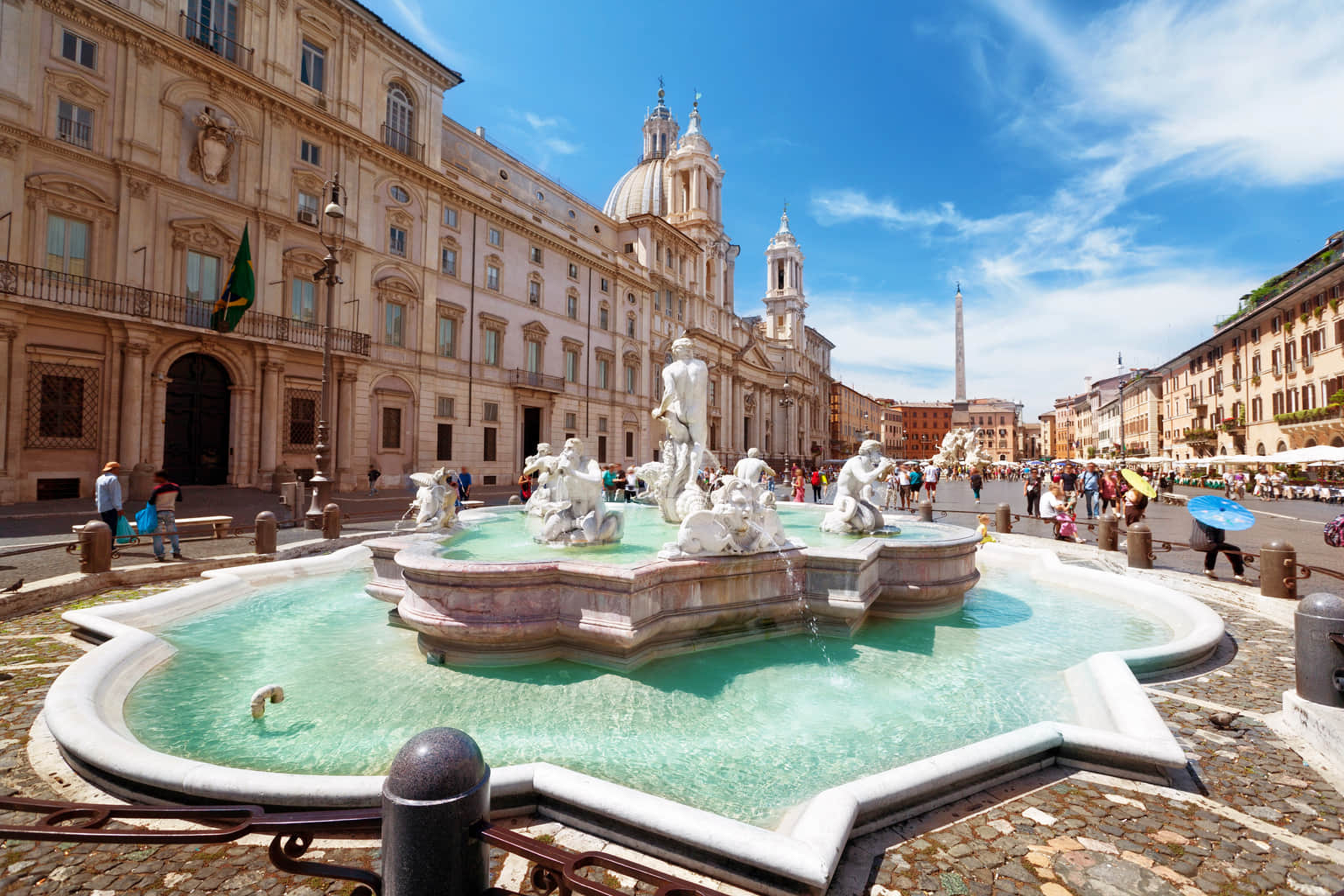
Piazza Navona is an excellent creation of genius Bernini and Borromini; this is one of the best Masterpieces of 17th-century Baroque architecture in Rome. The whole Piazza exhibits a well-planned harmony of construction and colors.
The architects have enhanced its elegance by the surprising contrast of visually classy houses alternating with a number of monumental Buildings along with proper placement of architecturally sober fountains. As this famous piazza of Rome is constructed on an ancient stadium, it has been constructed in monumental style by the Pope Innocent X and decedents (Pamphili).
The piazza is evidence of the Roman architectural style practiced in the 17th century. Different architects have contributed to the development of the square; the design of Sant' Agnese church was of Francesco Borromini, Girolamo Rainaldi, Carlo Rainaldi, and others.
The Fountain of the Moor was designed by Giacomo Della Porta and four rivers fountain was created by Bernini in early 1650 that enhances the beauty of the square. The northern end of the square is decorated with the Fountain of Neptune created in 1574 and this was also designed by Giacomo Della Porta.
The statue of Neptune was added years after the actual creation of the fountain; the statue was created by Antonio Della Bitta and added in 1878 to create symmetry with La Fontana del Moro.
Also Checkout: Things to Do in Rome
Church of Sant'Agnese in Agone

The Church of Sant’Agnese in Agone is one of the main tourist attractions in Piazza Navona. The Church of Sant'Agnese in Agone sits on the Piazza as a memorial of Sant'Agnese, the virgin saint, who was forced to expose herself before her death.
The skull of the saint is housed inside the church in an altar and her body is buried at Sant'Agnese Fuori Le Mura. This church is constructed following a special form of architecture known as the 17th-century Baroque style. The construction of the church started in 1652 and the architects of this fabulous construction were Girolamo Rainaldi and his son Carlo Rainaldi.
It took a long time to finish and it was completed under the leadership of Francesco Borromini. The interior of the church is decorated with exclusive paintings, frescoes, large-scale sculptures, and so on. It has special significance to the believer of Christianity as it contains the skull of Saint Agnese preserved inside an altar.
The church also contains many other martyrdom of saints, such as Martyrdom of Saint Eustace by Melchiorre Cafà, Martyrdom of Saint Emerentiana by Ercole Ferrata, Death of Saint Cecilia by Antonio Raggi, and so on.
Apart from religious services, the church is engaged in arranging regular classical concerts in the Borromini Sacristy, where one can experience a wide range of art forms including sacred Baroque works to chamber music and operas.
Suggested Read: Churches in Rome
Attractions near Piazza Navona
1. The Pantheon
This is a former Roman temple that is now converted into a Catholic church (Basilica of St. Mary and the Martyrs). This is one of the popular historic sites of Rome, built around 126-128 A.D. The site is also an important burial place of the painters Raphael and Annibale Carracci, and the architect Baldassare Peruzzi.
2. Campo de’ Fiori
This is a rectangular-shaped piazza located in the southward direction of Piazza Navona. This square is a popular market place to do some shopping in Rome.
3. Castel Sant’Angelo
One of the popular historic buildings of Rome, used as a military installation center as well as an escape route for the pope in case of danger.
4. The Mausoleum of Augustus
This is a historic tomb built in 28 BC during the ruling period of Roman Emperor Augustus. In the initial starting years of the 20th century, the interior of the Mausoleum of Augustus was a place to be used as a concert hall called the “Augusteo”. Later in 1930s, the hall was closed by Mussolini and reopened after the restoration as an archaeological site.
5. The Trevi Fountain
This fountain is placed close to the square, designed by Italian architect Nicola Salvi and Giuseppe Pannini. This is the largest fountain in Rome and also one of the most famous fountains. The fountain is about 85 feet tall in height and 65 feet wide. The fountain was established between 1600 to 1750 and is famous as an excellent instance of Baroque art in Italy.
6. The Spanish Steps
This is a set of steps to climb the steep slope between the Piazza di Spagna and Piazza Trinità dei Monti. Trinità dei Monti and Obelisco Sallustiano are situated on the top of the Spanish steps. John Keats Museum is located at the right corner and at the bottom you can find a 17th century Fountain, Fontana della Barcaccia. At the foot of the Steps, you can also have a number of small boutique designer shops and a wide range of restaurants and bars.
Suggested Read: Palaces In Rome




.jpg?w=1536&q=65&format=auto)